Common Waste Streams We Handle
Wastewater Challenges in Food, Beverage & Dairy
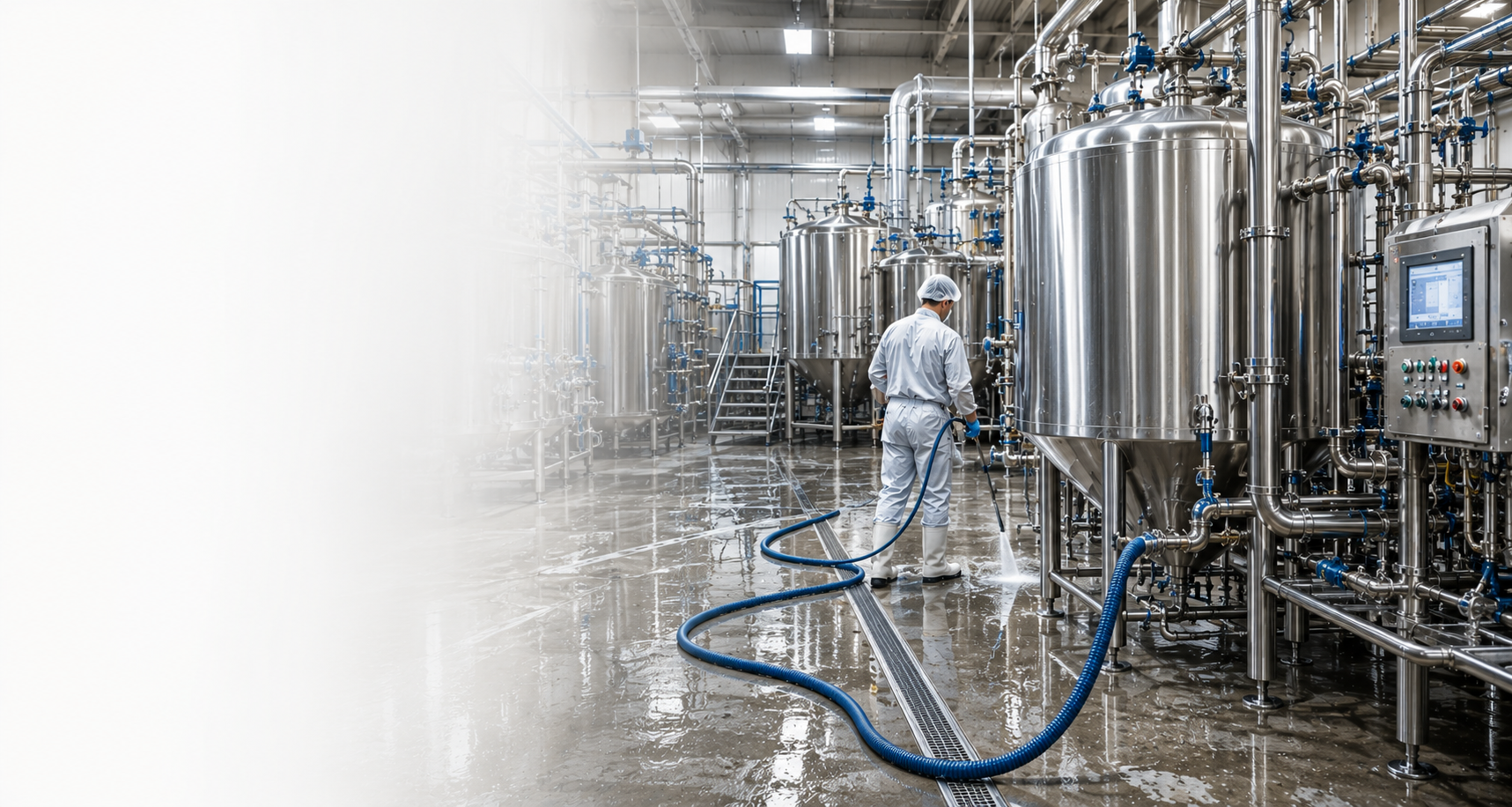
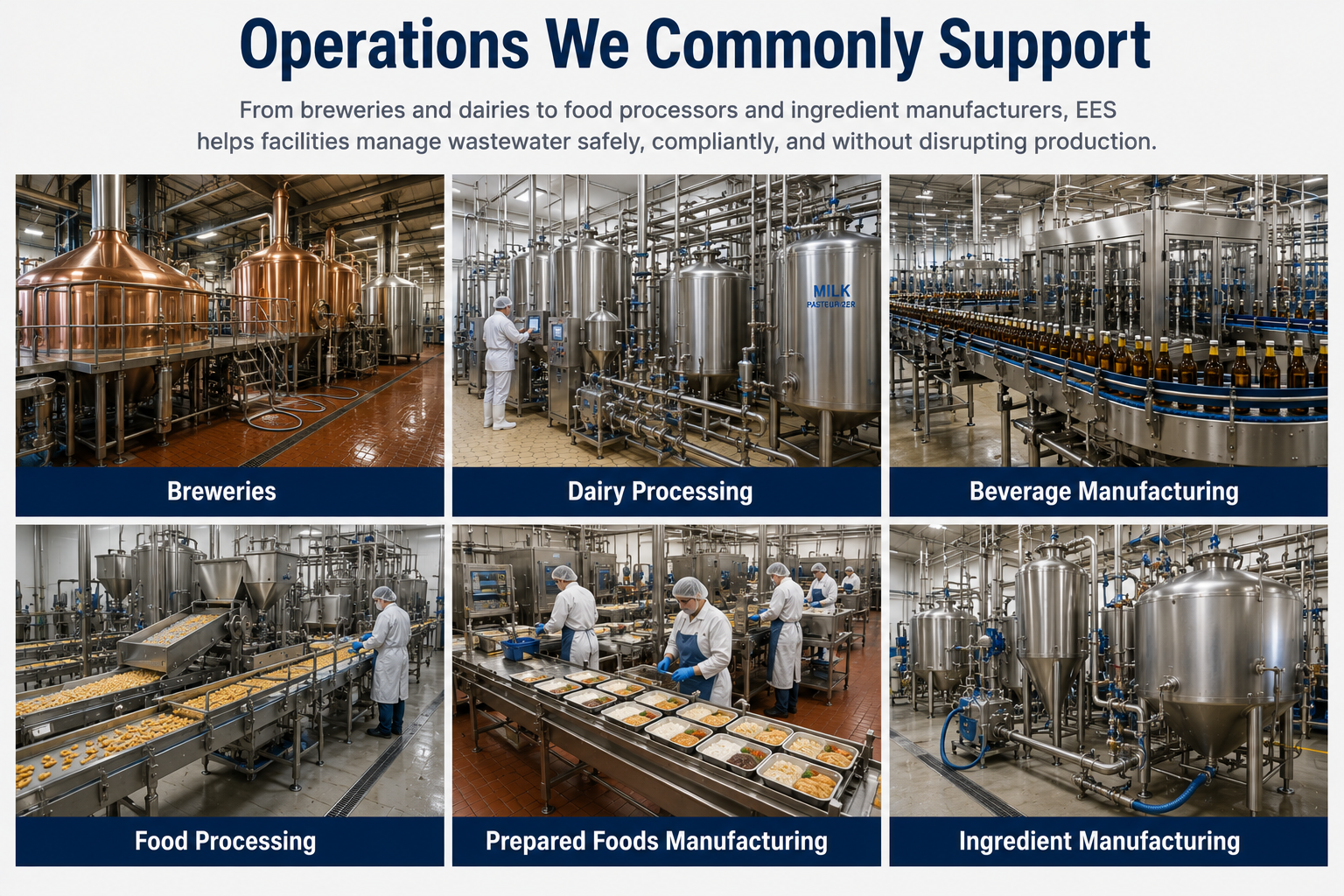
Food and beverage operations produce some of the highest-strength organic wastewater of any industry. CIP (clean-in-place) systems generate concentrated rinse water loaded with sanitizers, caustics, and food residue. Wash-down water from production floors picks up fats, oils, proteins, and solids that exceed municipal discharge limits. Breweries produce high-volume spent grain wash, yeast slurry, and fermentation waste with BOD levels that can run 30 to 50 times higher than typical domestic sewage. Dairy processors deal with milk wash, whey, and butterfat waste that creates some of the most oxygen-demanding discharge loads in the food sector.
Beyond the strength of the waste, the volume and frequency create operational headaches. Production ramps up, CIP cycles run more often, and suddenly your sumps, grease interceptors, or holding tanks are at capacity. Improper discharge — even accidental — can trigger compliance violations, discharge permit issues, and fines. EES takes that risk off your plate with scheduled hauling programs and emergency response when you need it.
How It Works
How Does Wastewater Hauling Work?
Whether you’re dealing with a one-time emergency pump-out or setting up a recurring service contract, the process is straightforward when you work with the right partner. Here’s exactly what to expect when you work with ENCON Environmental Services.
Ready to Get Your Waste Stream Under Control?
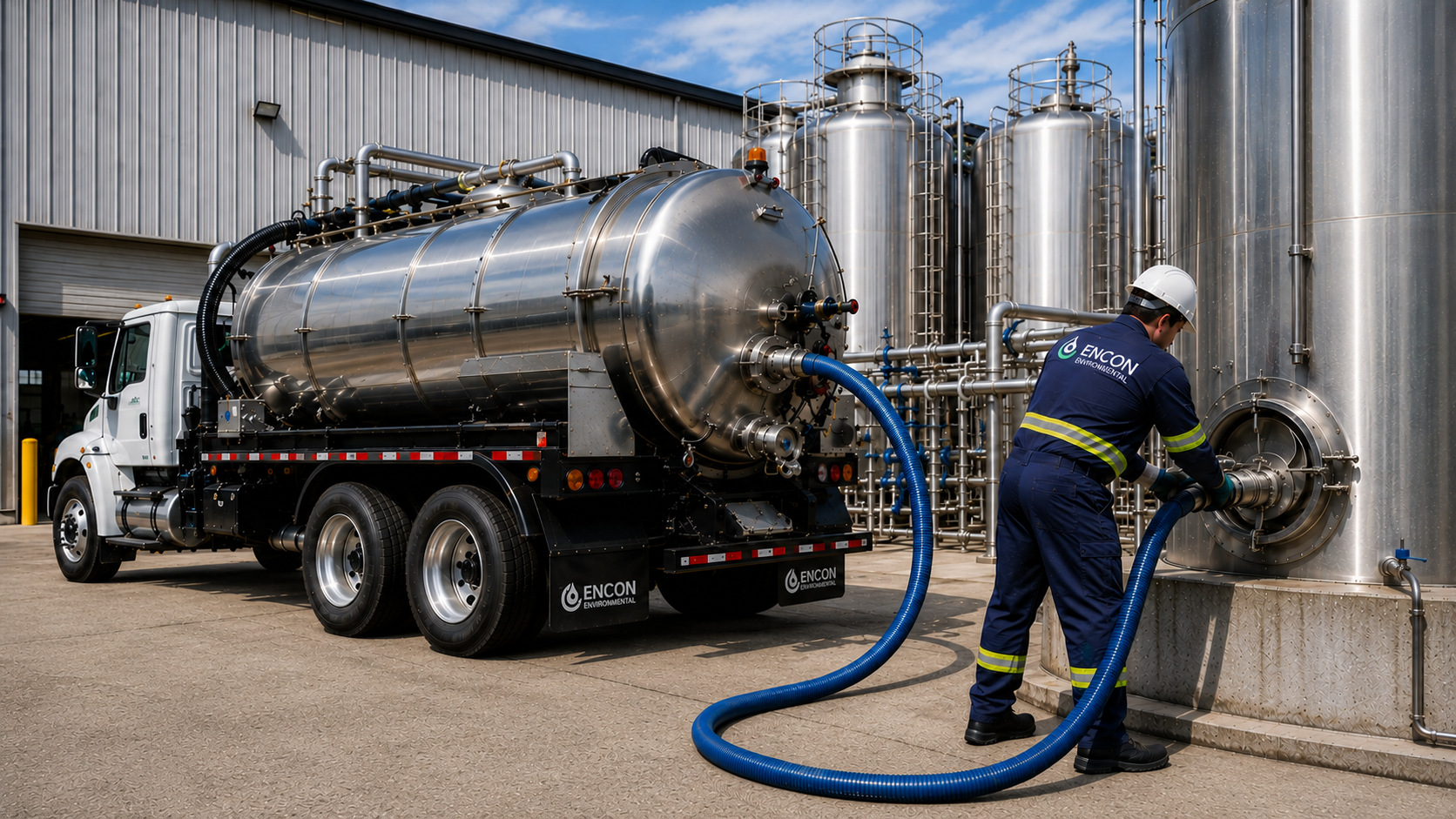
From grease trap pumping to high-BOD discharge hauling, EES has the equipment, licensing, and experience to handle what your operation generates — every time.
Learn More