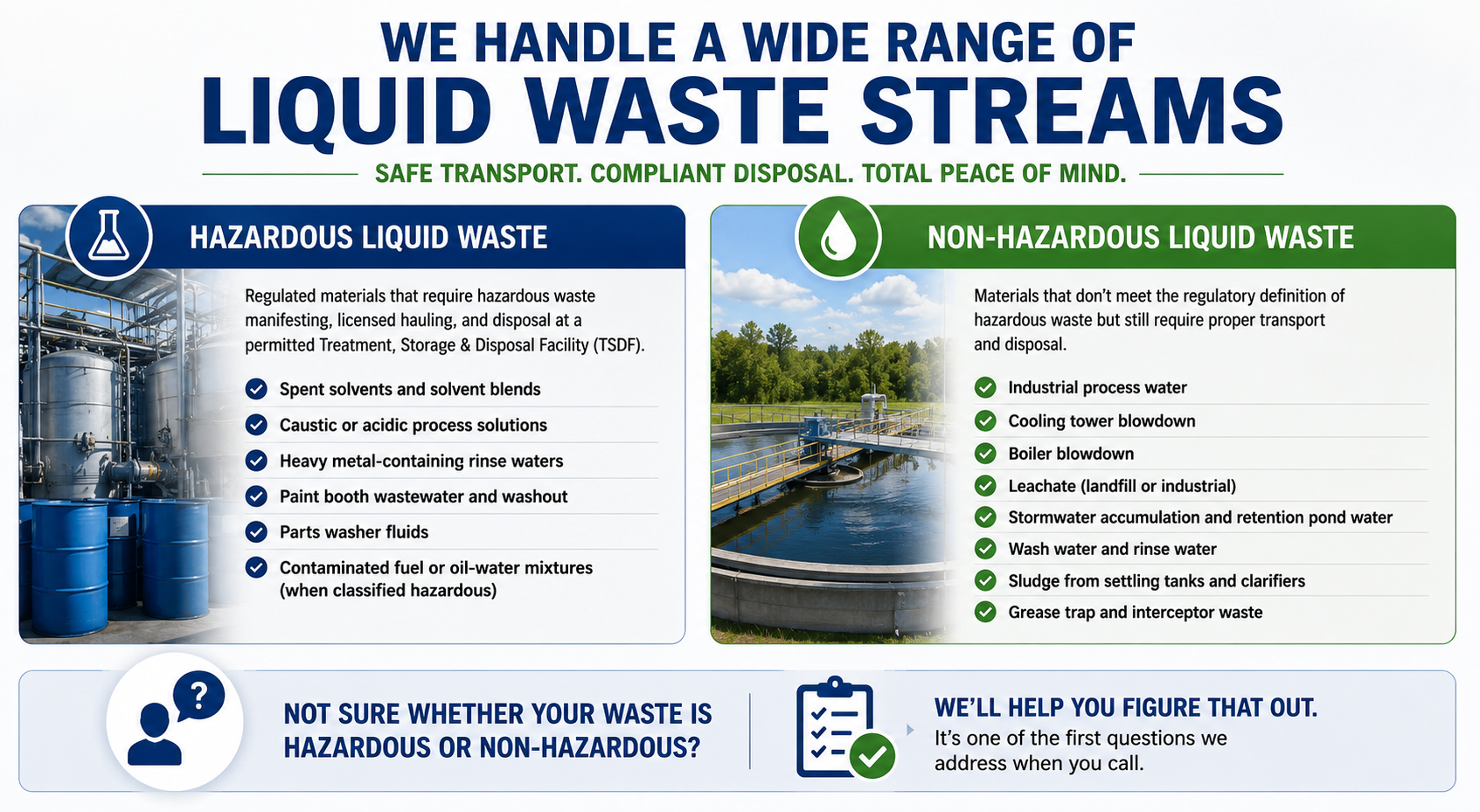
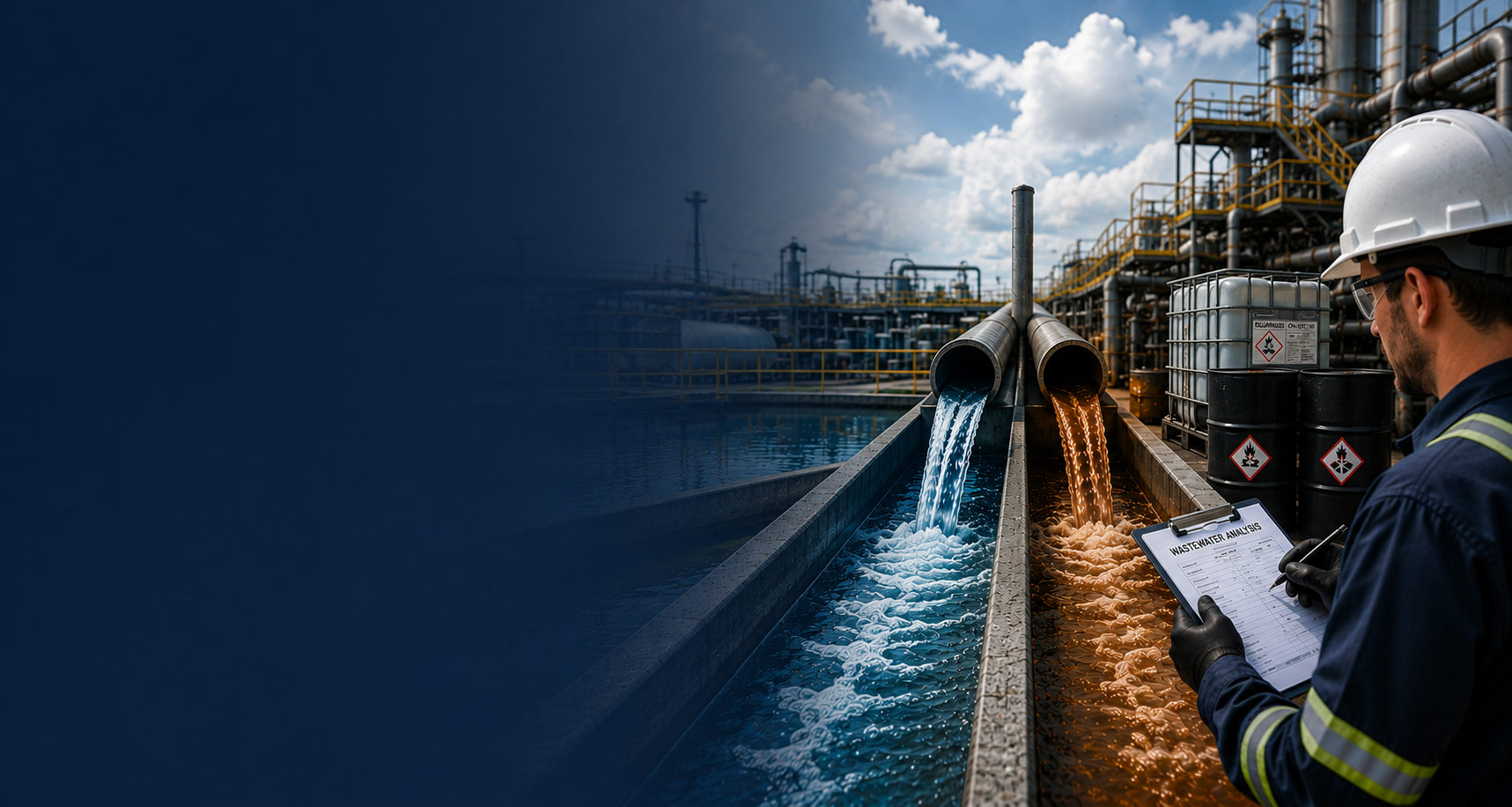
Wastewater generated by industrial and commercial operations doesn’t all get treated the same way — and it shouldn’t. How your liquid waste is classified determines how it must be stored, transported, treated, and disposed of. Getting it wrong can mean regulatory violations, fines, or liability.
What Makes Wastewater “Hazardous”?
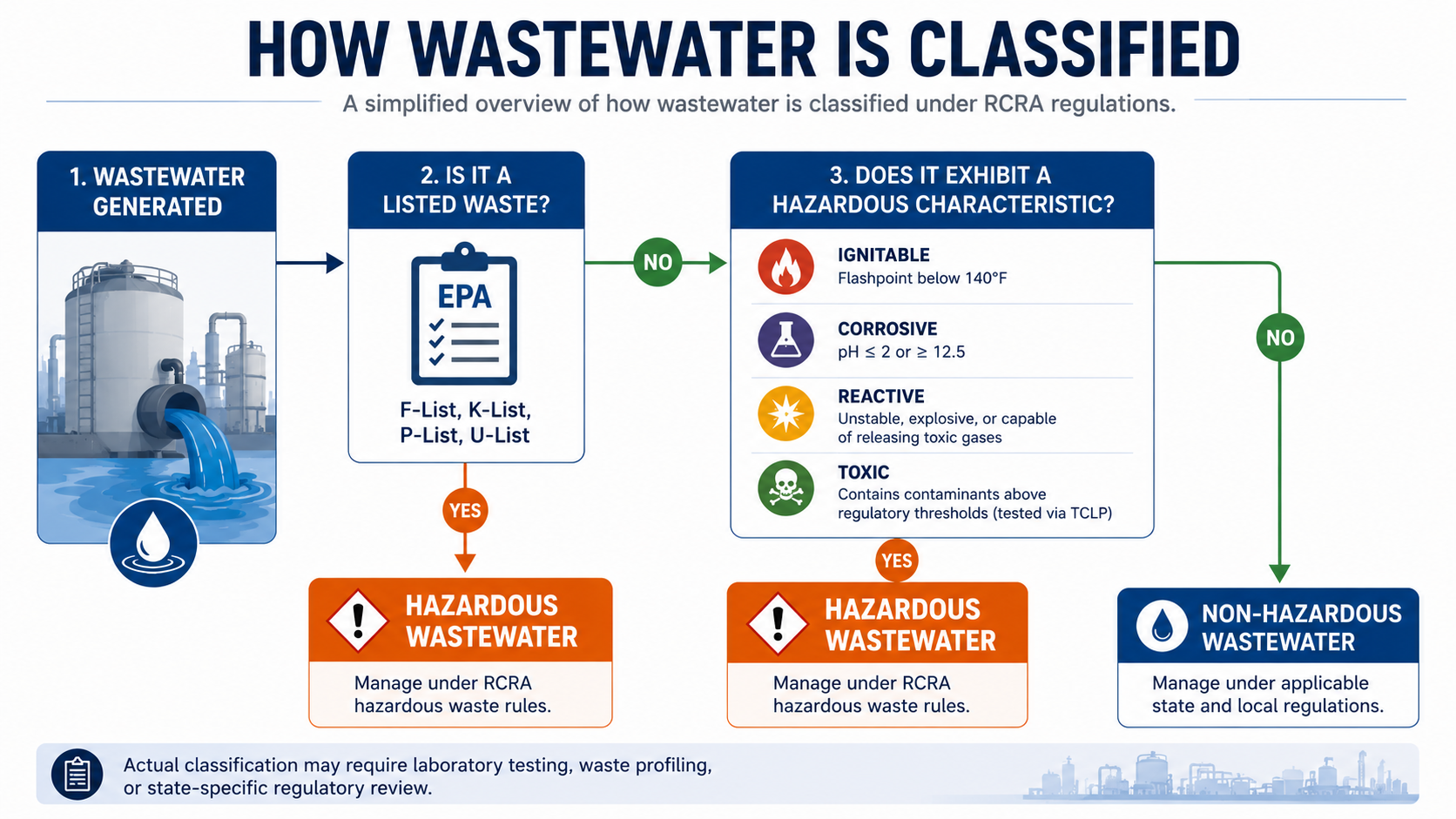
Under federal law, the EPA defines hazardous waste through the Resource Conservation and Recovery Act (RCRA). A liquid waste is considered hazardous if it meets any of the following criteria:
It appears on an EPA list:
- F-List — Wastes from common industrial processes (solvents, electroplating, etc.)
- K-List — Wastes from specific industries (petroleum refining, pesticide manufacturing, etc.)
- P-List / U-List — Discarded commercial chemical products
It exhibits a hazardous characteristic:
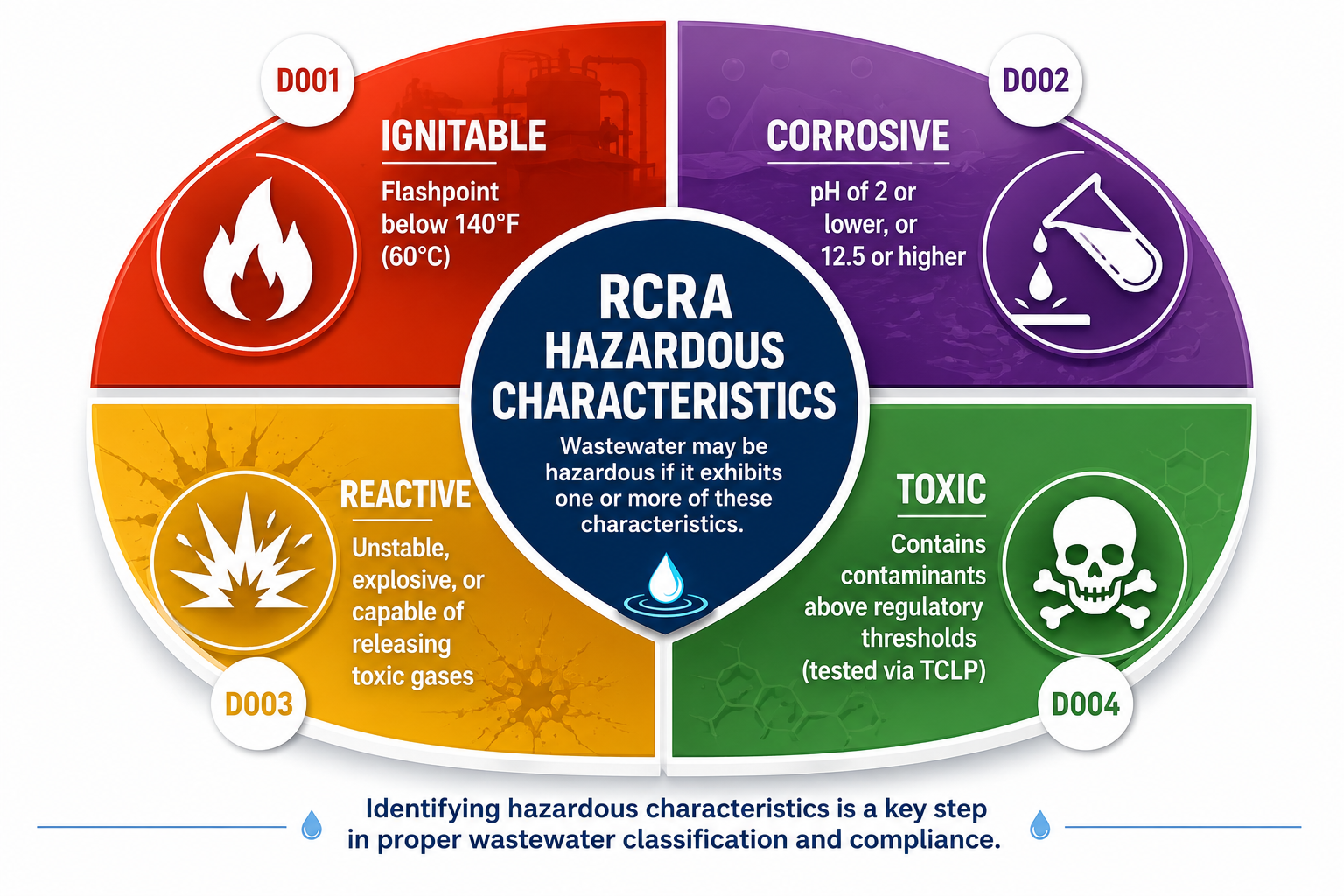
- Ignitability — Flashpoint below 140°F (e.g., certain solvent-bearing wastewaters)
- Corrosivity — pH of 2 or lower, or 12.5 or higher
- Reactivity — Unstable, explosive, or capable of releasing toxic gases
- Toxicity — Contains heavy metals, pesticides, or other contaminants above regulatory thresholds (tested via TCLP)
What Is Non-Hazardous Wastewater?
Non-hazardous liquid waste is wastewater that does not meet any of the RCRA hazardous criteria above. Common examples include:
- Cooling tower blowdown
- Boiler blowdown
- Parts washing water (water-based, no solvents)
- Floor scrubber wastewater
- Stormwater runoff
- Food processing wastewater
- Non-toxic process rinse water
Non-hazardous doesn’t mean unregulated — it simply means it falls under a different, generally less stringent framework. Discharge limits, treatment requirements, and disposal options still apply.
How Wastewater Is Classified
Not sure which category your wastewater falls into? The flowchart below walks through how classification works under RCRA — from waste generation through the listed and characteristic tests.
State Laws Add Another Layer
Federal RCRA standards set the floor — but states can and often do impose stricter requirements. What is classified as non-hazardous under federal law may be regulated as hazardous in your state.
- California operates under its own hazardous waste program (Cal/EPA DTSC), which is significantly more stringent than federal standards.
- Massachusetts and New Hampshire have state-specific waste codes that go beyond RCRA.
- Some states require additional manifesting, permitting, or treatment for waste streams that federal rules treat as routine.
The practical takeaway: Don’t assume federal classification is the whole story. Your state environmental agency is the authority on what applies to your facility.
Not sure where to start? Navigating federal and state classification requirements can be complex — especially when you’re managing multiple waste streams. EES works with facilities across New England every day on exactly these questions. We’re happy to help you think it through.
Why Classification Matters for Your Facility
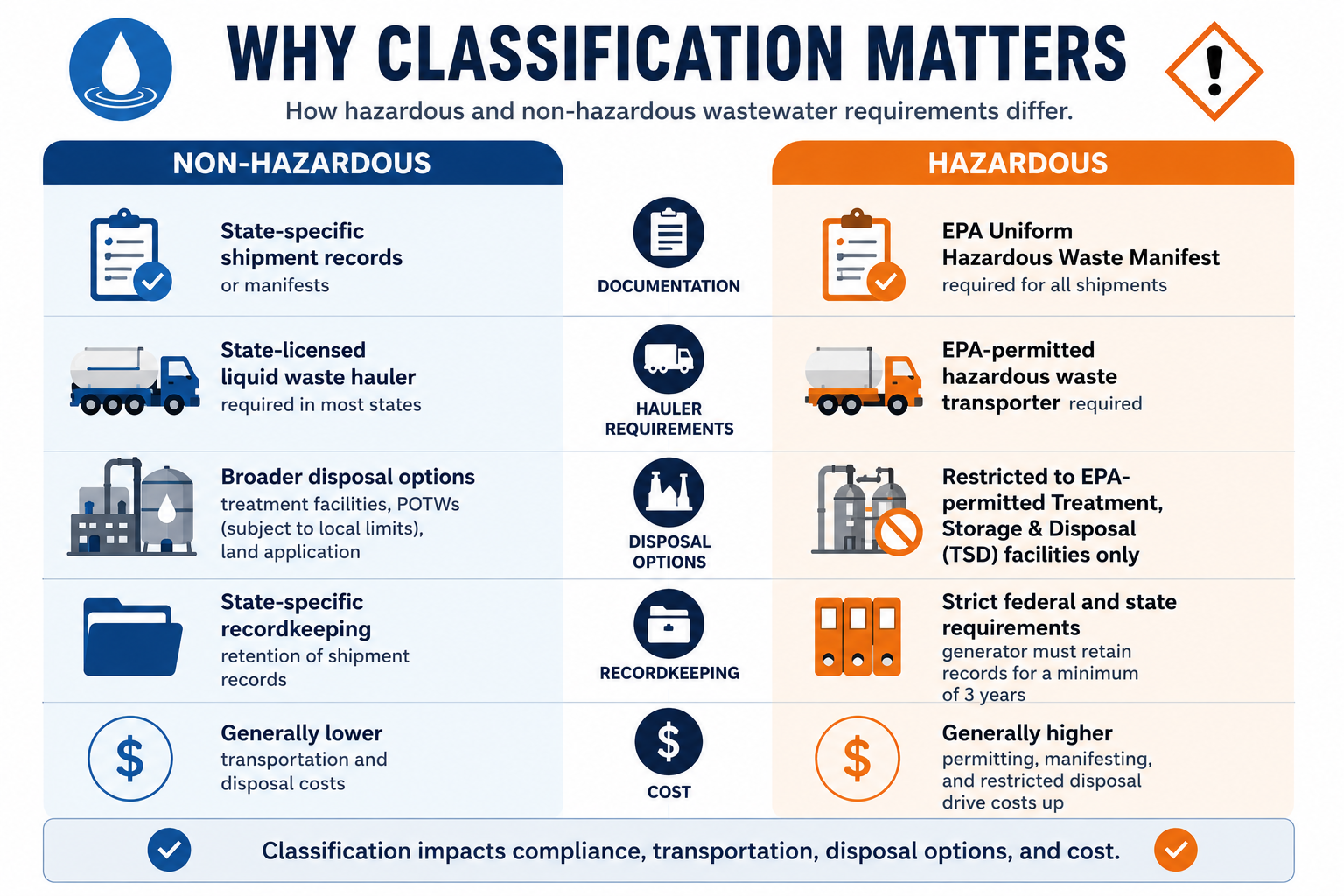
The classification of your wastewater affects nearly every aspect of how it must be managed — from the paperwork required to the hauler you can use and where your waste can go.
Not Sure How Your Wastewater Is Classified?
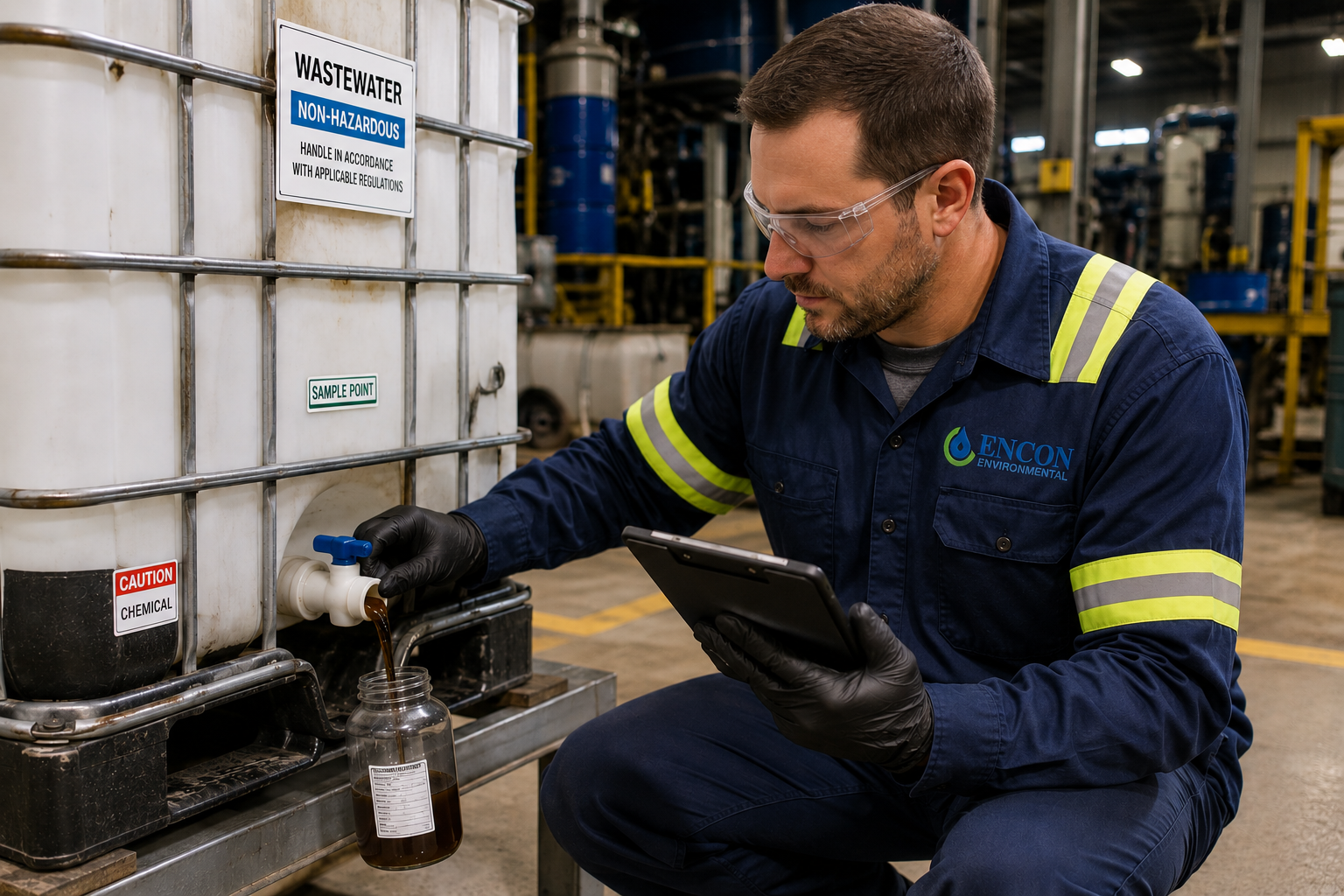
That’s more common than you’d think. Many facilities generate multiple waste streams with different classifications — and some fall into gray areas that require testing or regulatory interpretation.
EES works with both hazardous and non-hazardous liquid waste. If you’re not sure where your wastewater falls, we can help you think through it — and connect you with the right resources if testing or regulatory guidance is needed.